
Understanding DCOF Ratings for Industrial Tile Safety

February 12, 2026

Share This Article

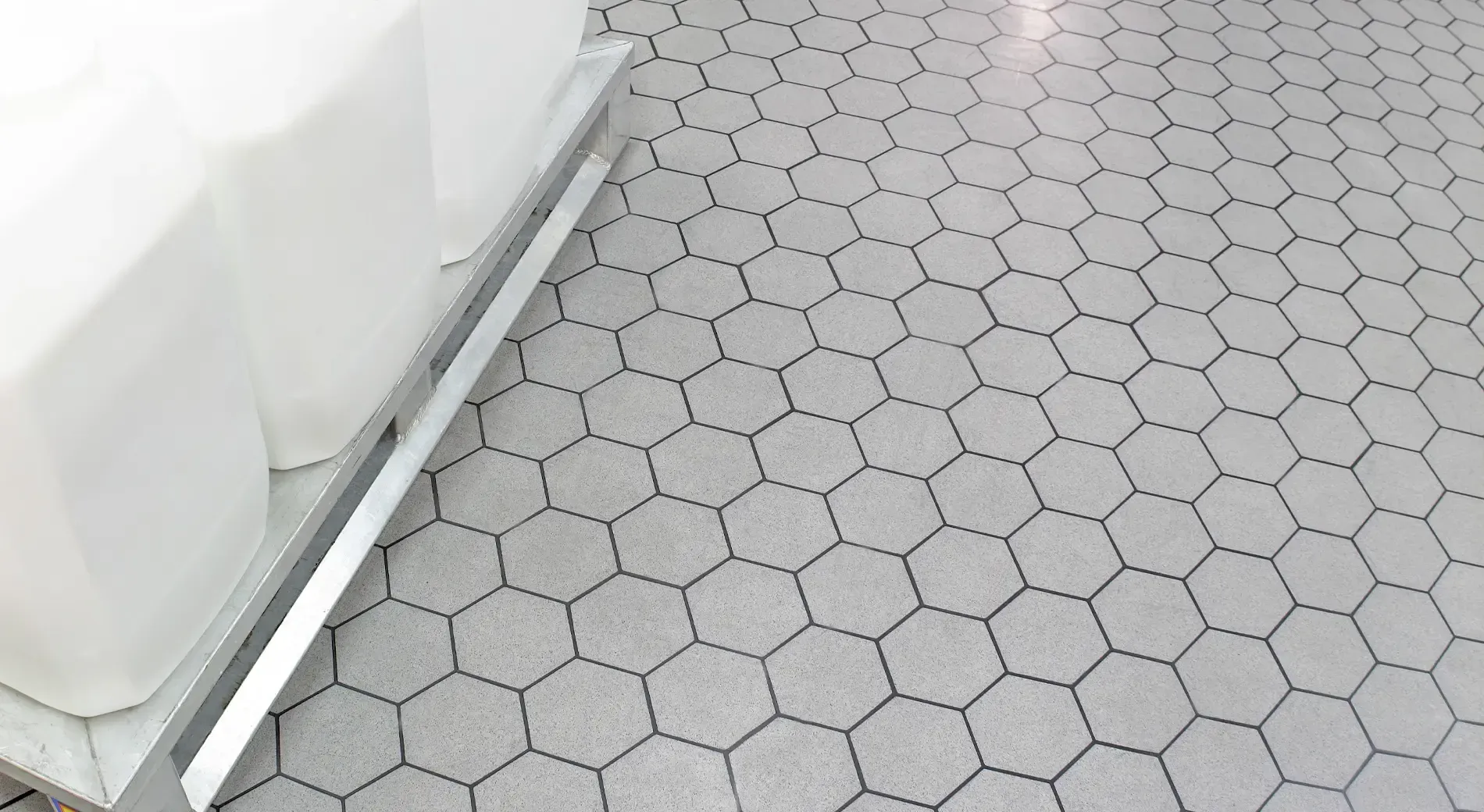
A close-up view of light gray hexagonal floor tiles next to the white base of a display shelf.

Industrial and commercial flooring must perform reliably under demanding conditions. Slip resistance is a critical component of that performance, but it is often misunderstood when reduced to a single number.


DCOF ratings provide useful insight into tile performance. However, they are only one part of a broader safety strategy.


Real-world environments are not controlled. Flooring decisions should not be based on controlled conditions alone.

What Is DCOF?


DCOF stands for Dynamic Coefficient of Friction. It is a measurement of how slip-resistant a tile is when walked upon while wet. It reflects the force required to move a person’s foot across the surface.


In practical terms, DCOF measures the resistance encountered when one surface moves across another, such as a shoe passing over a tile surface.


In flooring applications, DCOF evaluates how a tile performs under wet conditions. Higher values indicate greater resistance to m
ovement, which can contribute to improved traction.

How DCOF Is Measured

DCOF testing is conducted using standardized methods developed by organizations such as the Tile Council of North America.


DCOF is measured using the BOT-3000E machine in accordance with ANSI A326.3. The test is performed under controlled conditions that simulate a human step on a wet surface.

The process includes:

  • Wetting the tile surface with a standardized solution
  • Using the BOT-3000E device to measure friction during movement
  • Recording consistent readings under repeatable conditions


The result is a numerical value that reflects tile performance under specific laboratory conditions.

The Limitations of DCOF


DCOF is a useful metric. It is not a complete picture.


Slip resistance is influenced by factors that extend well beyond the tile surface:

  • Surface contamination such as water, oils, grease, and chemicals, whether from washdowns, production runoff, or foot traffic between zones
  • Cleaning and maintenance practices
  • Footwear types and tread patterns
  • Frequency and method of cleaning
  • Wear over time and traffic levels


In active facilities, contaminants are not occasional. They are part of daily operations.


Even a tile with a high DCOF value can present slip risks if th
ese variables are not controlled. DCOF values are measured under controlled laboratory conditions and may not reflect real-world conditions in active industrial environments.

Floor vs. Wall Tile Considerations


DCOF ratings are associated with floor tiles, where slip resistance directly impacts safety. Wall tiles are not typically evaluated using DCOF.


However, in environments exposed to moisture or frequent cleaning, such as food processing or washdown areas, wall tile selection still plays an important role. Cleanability, chemical resistance, and long-term durability remain critical.

Slip Resistance Is a System


Relying on a single number to define floor safety is a limited approach. Effective slip resistance should be treated as a system. In many industrial environments, slip resistance classifications such as R11 or R12 are often used alongside DCOF values to better match surface texture to real-world conditions.

A 5x5 grid of twenty-five identical white square cells enclosed by a thick black outline.

Surface Design


Engineered surface textures enhance traction while maintaining cleanability. Argelith tiles are developed with precision surface profiles that balance grip with hygienic performance.

A black and white shield icon divided into four quadrants in a checkerboard pattern.

Material Integrity


A fully vitrified structure, meaning an ultra-low absorption rate, helps limit moisture and contaminant penetration into the tile. This supports consistent performance over time.

Installation Practices


Installation directly affects how a floor performs in service:

  • Narrow grout joints, typically 1/16" to 1/8", help reduce standing water
  • Epoxy grout may be appropriate in chemically demanding environments
  • Proper slope and flatness improve drainage and reduce hazard zones
  • Experienced installers are essential for achieving the intended performance

Maintenance Protocols


Maintenance is not secondary. It is part of the system.

  • Regular cleaning removes contaminants that reduce available traction
  • Auto-scrubbers with appropriate pads help maintain surface performance
  • Aggressive pads may be required in high-traffic or heavily soiled areas
  • Periodic deep cleaning supports long-term consistency

Slip resistance is not a fixed property. It is influenced by ongoing maintenance and operational conditions. Even surfaces designed to provide traction can become less effective if contaminants are allowed to accumulate or if cleaning practices are not maintained. Regular cleaning, monitoring, and appropriate maintenance procedures are important to help support safe walking conditions over time.

Designing for Real-World Conditions


Every facility operates differently. Flooring must perform accordingly.


Exposure to water, grease, chemicals, and continuous traffic creates conditions that cannot be replicated in testing alone. Flooring systems must be selected based on how spaces are actually used.


Performance is defined in operation, not in isolation.


Argelith’s engineered ceramic tiles are designed to meet these demands through:

  • Precision German engineering for consistent surface quality
  • Fully vitrified construction for durability and hygiene
  • Slip-resistant surface profiles suited for demanding environments
  • Resistance to chemicals, heavy loads, and rigorous cleaning protocols


These characteristics support long-term performance in environments where conditions are constantly changing.

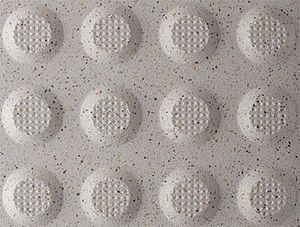
A close-up of a speckled off-white tactile paving surface featuring a grid of raised, textured circular domes.

Selecting the Right Tile Solution


Choosing the right flooring solution requires a comprehensive evaluation of:


Operational conditions and exposure risks

Cleaning and maintenance procedures

Traffic patterns and load requirements

Regulatory considerations and project specifications


A single metric cannot account for all variables. A system-based approach can.

Partner with Argelith for Engineered Flooring Solutions


Argelith works with architects, facility managers, and contractors to develop flooring systems tailored to demanding environments. Each solution is grounded in engineering precision and real-world performance.


Request a consultation for tailored, high-performance flooring solutions or explore engineered tile options.

Disclaimer: Floor performance characteristics depend on proper product selection, substrate preparation, installation methods, site conditions, and ongoing maintenance. Slip resistance ratings and hygienic performance may vary based on use conditions, cleaning practices, and environmental factors.

Connect With Us

Large industrial stainless steel machine in a clean, clinical laboratory setting with white walls and flooring.
March 26, 2026
Support cleanroom compliance in industrial environments with Argelith Ceramic Tiles engineered for hygiene, durability, and reliable performance in washdown conditions.
A person in protective white clothing works in a sterile, industrial food processing facility filled with steel machinery.
March 10, 2026
Discover Disadvantages of Epoxy Floors in industrial settings and why Argelith Ceramic Tiles offer durable, low-maintenance, long-term flooring solutions.
Wide supermarket aisle with products on shelves, overhead signs.
March 2, 2026
Argelith Ceramic Tiles delivers durable retail flooring and grocery store flooring engineered for heavy traffic, safety, and long-term performance.
Show More