Industrial Flooring’s Role in LEED Certification for Sustainable Projects
Sustainability goals often begin at the drawing board but get challenged in the field. Industrial floors must carry more than just operational loads. They influence air quality, energy use, and longevity. In industrial spaces where performance takes precedence, flooring choices become sustainability decisions. The materials underfoot play a larger role in long-term outcomes than most teams initially realize.
Understanding LEED Certification
Meeting
sustainability benchmarks in industrial construction requires more than compliance checklists. LEED Certification offers a measurable structure for improvement, connecting operational efficiency to environmental responsibility from the ground up.
What is LEED?
LEED, or Leadership in Energy and Environmental Design, is a globally recognized certification system for evaluating building sustainability. Developed by the U.S. Green Building Council, it provides a framework for improving environmental performance across design, construction, and operation.
Industrial projects pursuing LEED Certification are scored across multiple categories, each contributing points toward overall certification levels. While the program often brings to mind energy systems or water use, material selection and material
quality also play a significant role.
In high-impact facilities like manufacturing plants or food processing sites, durable finishes that promote hygiene and performance can support both certification goals and long-term building efficiency.
LEED Credit Categories Relevant to Flooring
Flooring can contribute to several LEED categories, depending on the material’s composition, durability, and environmental impact. Projects using the
best floor tile materials often find alignment in areas like materials sourcing, air quality, and long-term performance.
Materials and Resources (MR)
The MR category focuses on sourcing and lifecycle impact. Flooring that lasts longer, contains fewer harmful substances, or supports material transparency may contribute toward LEED credits depending on project design and documentation. Products that meet third-party standards or come from responsible supply chains are favored in this category. Fully vitrified industrial tiles align well here due to their density, durability, and minimal environmental impact during use. Their extended service life reduces replacement frequency, which supports resource conservation and waste reduction across the building’s lifespan. This can support credits related to Environmental Product Declarations (EPDs), material transparency, and lifecycle impact reduction.
Indoor Environmental Quality (EQ)
This category evaluates how materials affect indoor air quality and occupant health. Flooring that doesn’t off-gas harmful chemicals or trap contaminants contributes to a cleaner, safer working environment. In industrial settings where spills and harsh cleaners are common, selecting materials that hold up under those conditions is key.
Chemical-resistant tile flooring helps support indoor air quality due to low VOC emissions from the tile material itself, while also supporting effective cleaning in demanding environments. Its dense, low-absorption structure helps maintain a sanitary workspace without compromising LEED alignment.
Innovation in Design (ID)
LEED awards points for creative strategies that go beyond standard credit requirements. In industrial flooring, this might involve specifying materials that enhance both performance and safety in challenging environments.
Anti-slip tile flooring contributes here when it reduces accident risk without compromising durability or hygiene. Innovative layouts, slope designs, or transitions between zones can also improve functionality and safety. When paired with smart material choices, these elements demonstrate a thoughtful approach to building performance that extends beyond the checklist.
Beyond the Checklist: Flooring as a Long-Term Sustainability Asset
LEED points offer structure, but long-term sustainability comes from how materials perform under real-world conditions. Flooring plays a quiet but lasting role in how buildings perform over time. Premature surface failure, constant repairs, or poor hygiene can all undermine sustainability goals. Durable materials that perform reliably in industrial settings help reduce lifecycle costs, limit downtime, and extend long-term building integrity. In the event of localized damage, individual tiles can be replaced without removing the entire floor system, which helps reduce material waste and supports long-term sustainability goals. Some teams discover too late that short-term savings lead to long-term setbacks. That’s why it’s worth considering
why cheap isn’t cost-effective when evaluating industrial flooring options.
How Argelith Flooring Supports LEED Certification Goals
Our tiles are engineered for environments where performance, hygiene, and longevity are nonnegotiable. While flooring alone does not determine LEED certification, durable, low-emission materials can support project teams in achieving credits related to material transparency, indoor environmental quality, and lifecycle performance.
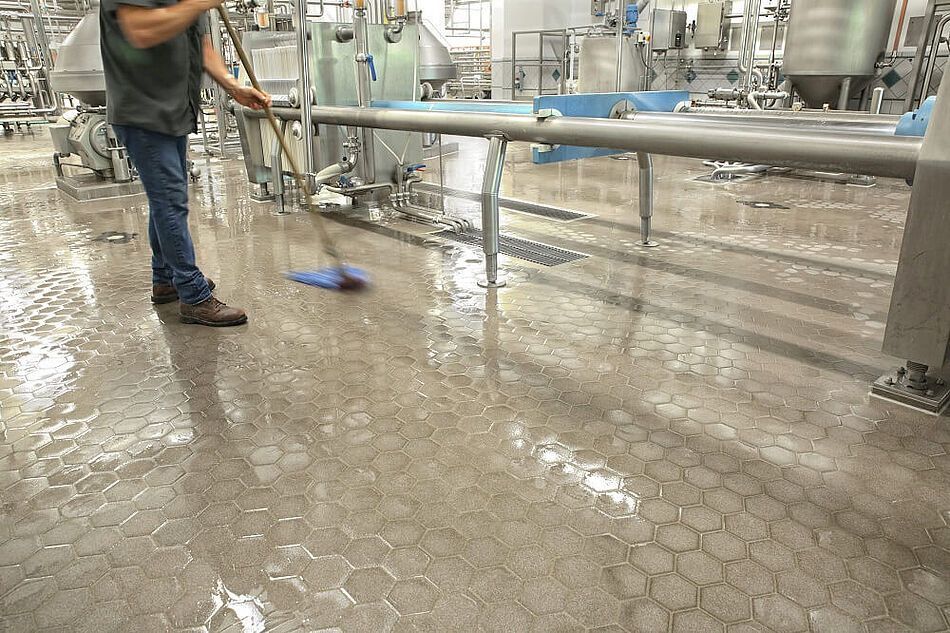
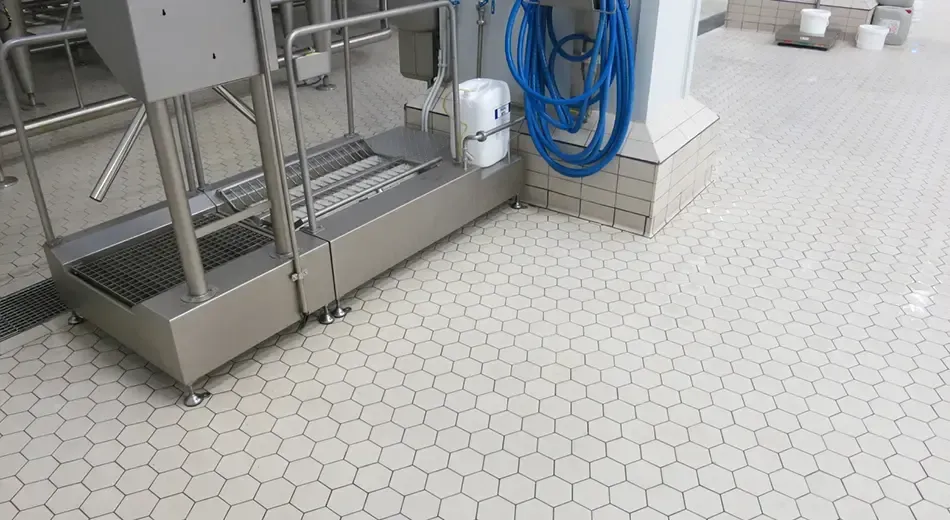
Our tiles are engineered for environments where performance, hygiene, and longevity are nonnegotiable. Their fully vitrified structure supports LEED goals through durability, low absorption, and long service life. This reduces the need for frequent replacement, helping projects conserve resources and reduce waste.
Slip resistance, heat tolerance, and chemical durability contribute to safety and functionality in complex spaces. Across theindustries we serve, including several with demanding safety and hygiene standards, the consistent performance of Argelith tile aligns well with long-term sustainability priorities.
It’s a flooring solution built to last. It also supports building performance at every stage. Fully vitrified ceramic tiles have an extremely low water absorption rate, typically below 0.5%. This dense structure supports long-term durability, reduces the risk of moisture-related degradation, and contributes to a flooring system that performs consistently over decades of use.
Materials Transparency and Environmental Impact
Transparency around material sourcing and environmental impact is becoming a standard part of sustainable construction. LEED recognizes this shift through credits that reward disclosure and responsible manufacturing. Our team supports these values through consistent documentation, long-term durability, and low-impact product design that fits into broader sustainability frameworks.
Key contributions include:
- Environmental Product Declarations (EPDs) and supporting product documentation are available upon request.
- Tiles are manufactured using controlled firing processes designed for energy efficiency
- No added VOCs, sealants, or coatings
- Long lifespan reduces material waste over time and aligns with closed-loop facility planning
These characteristics help project teams meet transparency goals while reducing environmental burdens across the flooring lifecycle.
Durability and Maintenance in Industrial Flooring: The Overlooked LEED Advantage
Durability plays a direct role in reducing environmental impact over time. Surfaces that hold up under heavy use require fewer repairs, replacements, and maintenance cycles. Because fully vitrified ceramic tile systems can remain in service for decades when properly installed and maintained, they help reduce the environmental impact associated with repeated floor replacement cycles. Each of these activities carries its own material and energy costs.
Our dense, abrasion-resistant tiles are built for decades of service in high-traffic environments. Features like baked-in surface treatments and
water-resistant tile flooring help maintain performance and are compatible with a wide range of industrial cleaning protocols
Long-lasting materials also help facilities stay operational with fewer disruptions, reinforcing both productivity and sustainability without compromise.
Designing for Performance and Compliance
Industrial facilities face unique challenges that combine safety, hygiene, and operational efficiency. Meeting code is a starting point. Effective flooring also has to perform under real-world conditions without compromising long-term goals. Argelith tiles are specified in spaces where slip resistance, chemical durability, and heat tolerance aren’t optional.
These qualities help design teams meet regulatory requirements while also contributing to LEED benchmarks. In food zones and heavy-load areas alike, the right flooring supports both performance and regulatory compliance without sacrificing durability.
Partnering for Sustainable Success
Sustainable outcomes start with clear goals and move forward through coordination across teams committed to long-term results.
Argelith works closely with project teams to align flooring choices with both operational and environmental goals. Our tiles are built to perform across decades of use, reinforcing efficiency and compliance every step of the way.
When long-term durability, hygiene, and sustainability matter, selecting the right flooring partner makes a measurable difference. To discuss how we can collaborate on your next project,
contact us for tailored insight and product recommendations.
Disclaimer: LEED credit achievement depends on overall building design, documentation, and project-specific criteria.