Hygienic Flooring Guide - Meet HACCP Food Safety Standards
Hygienic flooring plays a critical role in meeting regulatory food safety standards such as HACCP. In food production environments, surfaces must support rigorous sanitation protocols to minimize contamination risks and ensure compliance. Flooring, as a constant point of contact in processing areas, influences both safety and sanitation. This guide explores how to select flooring that supports HACCP compliance and highlights why Argelith’s engineered ceramic tiles are a trusted choice in food and beverage environments.
What is HACCP and Why Does it Matter?
HACCP stands for Hazard Analysis and Critical Control Points, a systematic approach to identifying, evaluating, and controlling food safety hazards. Adopted globally, HACCP is the cornerstone of food safety programs in manufacturing, packaging, and processing.
Why does it matter? Regulatory agencies, including the FDA and USDA, mandate HACCP compliance for many food operations. Non-compliance can lead to production shutdowns, recalls, and damage to brand reputation.
The Role of Hygienic Flooring in Food Safety Compliance
Hygienic flooring is a fundamental component of a facility’s sanitary envelope. In HACCP-compliant environments, flooring must be engineered to prevent contamination, support effective cleaning, and withstand harsh conditions. Hygienic flooring helps eliminate harborage points for bacteria, facilitates efficient sanitation, and minimizes safety hazards like slipping or standing water.
Materials with porous surfaces, cracks, or poor chemical resistance can compromise food safety protocols. Conversely, high-performance materials,
such as fully vitrified ceramic tile, help processors meet HACCP standards by delivering a non-absorbent, durable, and easily cleanable surface.
Understanding HACCP Food Safety Standards
HACCP principles demand proactive identification and management of contamination risks. This includes:
- Preventing microbial growth by eliminating moisture-retaining surfaces.
- Ensuring durability under rigorous cleaning regimes and harsh sanitizers.
- Maintaining surface integrity to prevent harboring pathogens.
- Enhancing facility cleanability with seamless transitions and chemical resistance.
Floors, being high-contact surfaces exposed to spills, traffic, and chemicals, must be designed to uphold these standards every day.

What is Hygienic Flooring?
Hygienic flooring refers to floor systems designed to support cleanliness, minimize contamination, and endure repeated cleaning. Essential features include:
- Low porosity or full vitrification helps prevent moisture penetration.
- Slip resistance to reduce fall risk in wet environments.
- Chemical and thermal shock resistance to withstand sanitation procedures.
- Coved and sloped edges for improved drainage and cleanability.
Evaluating Flooring Options for HACCP Environments
Several flooring options claim suitability for food environments, but performance varies:
- Epoxy Coatings: While seamless, they often degrade under heavy traffic and repeated cleaning with caustics.
- Rubber Floors: May be suitable in certain low-risk areas, but they can degrade under heavy loads or harsh sanitation protocols
- Concrete: Concrete is absorbent unless sealed, and even when sealed, surface degradation can still occur over time.
- Ceramic Tiles: With a fully vitrified structure and mechanical strength, tiles provide superior hygiene and longevity when properly installed.
For facilities subject to HACCP audits, ceramic tiles offer a strong combination of long-term performance and sanitary integrity.
Ceramic Tiles as a Hygienic Flooring Solution
Argelith’s fully vitrified ceramic tiles are engineered specifically for demanding industrial environments. Here’s how they align with HACCP standards:
- Non-absorbent surface: Vitrification ensures water and contaminants remain on the surface, simplifying cleaning.
- Chemical resistance: Withstands exposure to aggressive cleaning agents and food acids.
- Thermal resistance: Maintains integrity during thermal cycling and high-temperature washdowns.
- Slip resistance: Textured surfaces reduce the risk of workplace accidents when paired with proper cleaning protocols and footwear.
- Modular system: Compatible with coved bases, bullnose edges, and stainless-steel drains to ensure a seamless hygienic envelope.
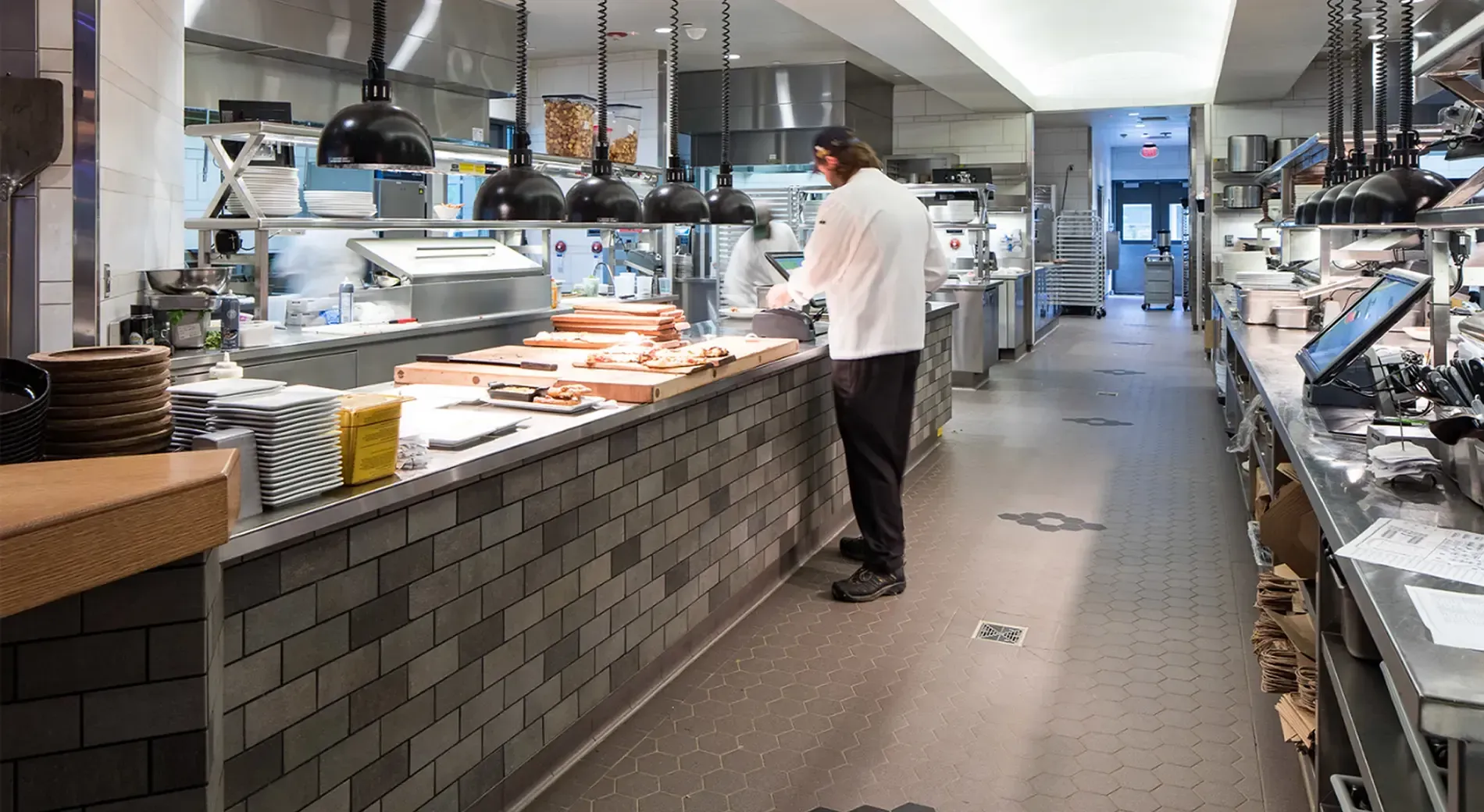
These attributes make Argelith tiles a trusted solution in dairies, meat processing plants, breweries, and commercial kitchens.
Real-World Applications
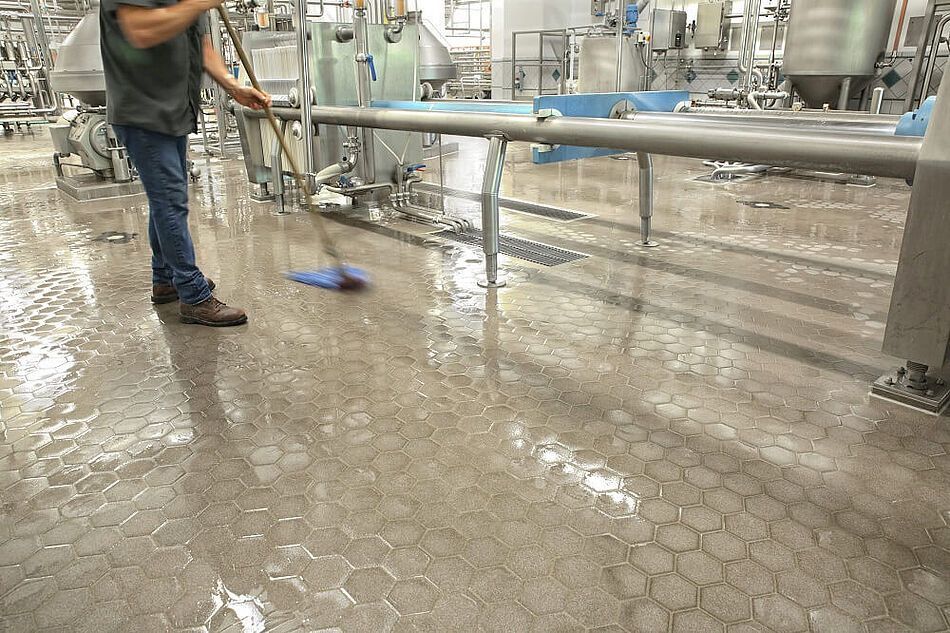
Argelith tiles are in active use across North America’s most rigorous environments. Facilities such as beverage bottling plants, cheese manufacturers, and pet food processors depend on these tiles to maintain sanitary compliance, resist impact from equipment, and retain their clean appearance under heavy use.
Installation Considerations
Achieving optimal performance requires expert installation. Key factors include:
- Proper slope for drainage to avoid standing water.
- Narrow grout joints (1/16"–1/8") to minimize edge chipping and water retention.
- Use of epoxy grout in high-chemical or high-washdown environments to prevent grout degradation.
- Thermal break management for environments with rapid temperature changes.
Argelith supports projects by working with qualified installers familiar with HACCP flooring demands, ensuring installation adheres to best practices.
Post-Installation Best Practices
Long-term hygiene depends on consistent maintenance:
- Initial acid wash to remove grout haze.
- Daily cleaning using auto-scrubbers with aggressive pads if necessary.
- Routine inspections to monitor joint integrity and slip resistance.
- Prompt repairs to any chipped or broken tiles to maintain hygiene and safety.
These practices protect your investment and ensure regulatory compliance year-round.
Certified Slip Resistance You Can Trust
When workplace safety is a priority, relying on independently verified performance is essential. Argelith’s fully vitrified ceramic tiles are certified by HACCP International, a globally recognized authority on food safety certification.
Specifically, the Hexalith Series Fine Grained Ceramic Tile is certified as a food-safe floor surface, classified for the SSZ (Splash or Spill Zone), which is critical in environments exposed to liquids and contaminants. This certification ensures that Argelith tiles are suitable for use in food and beverage facilities operating under a HACCP-based Food Safety Programme.
Why Certification Matters
- Third-Party Validation: Certification by HACCP International confirms compliance with stringent global standards.
- Risk Reduction: Ensures the flooring minimizes contamination risks, supports sanitation practices, and maintains a safe, slip-resistant surface.
- Audit-Ready Documentation: A downloadable PDF certificate is available for project documentation, audits, and regulatory inspections, providing proof of compliance and quality.
The current certificate is valid from February 13, 2025, through March 13, 2027, affirming the ongoing commitment to performance and safety.
By choosing Argelith, you’re not only selecting a high-performance flooring system but also gaining documented assurance that your facility meets internationally recognized food safety and slip-resistance standards.
Key Takeaways
HACCP standards demand flooring that is durable, non-porous, and easy to sanitize.
- Ceramic tile—especially Argelith’s vitrified products—offers unmatched performance in hygienic environments.
- Expert installation and ongoing maintenance are critical for long-term compliance.
- Argelith supports tailored solutions, fast logistics, and industry-specific guidance.
Request a consultation today to explore high-performance flooring solutions designed for your food facility.
Note: While Argelith’s vitrified tiles are engineered to meet the highest standards of hygiene and safety, regulatory compliance depends on proper installation, cleaning practices, and overall facility design. Always consult with a food safety professional when designing HACCP-compliant facilities.