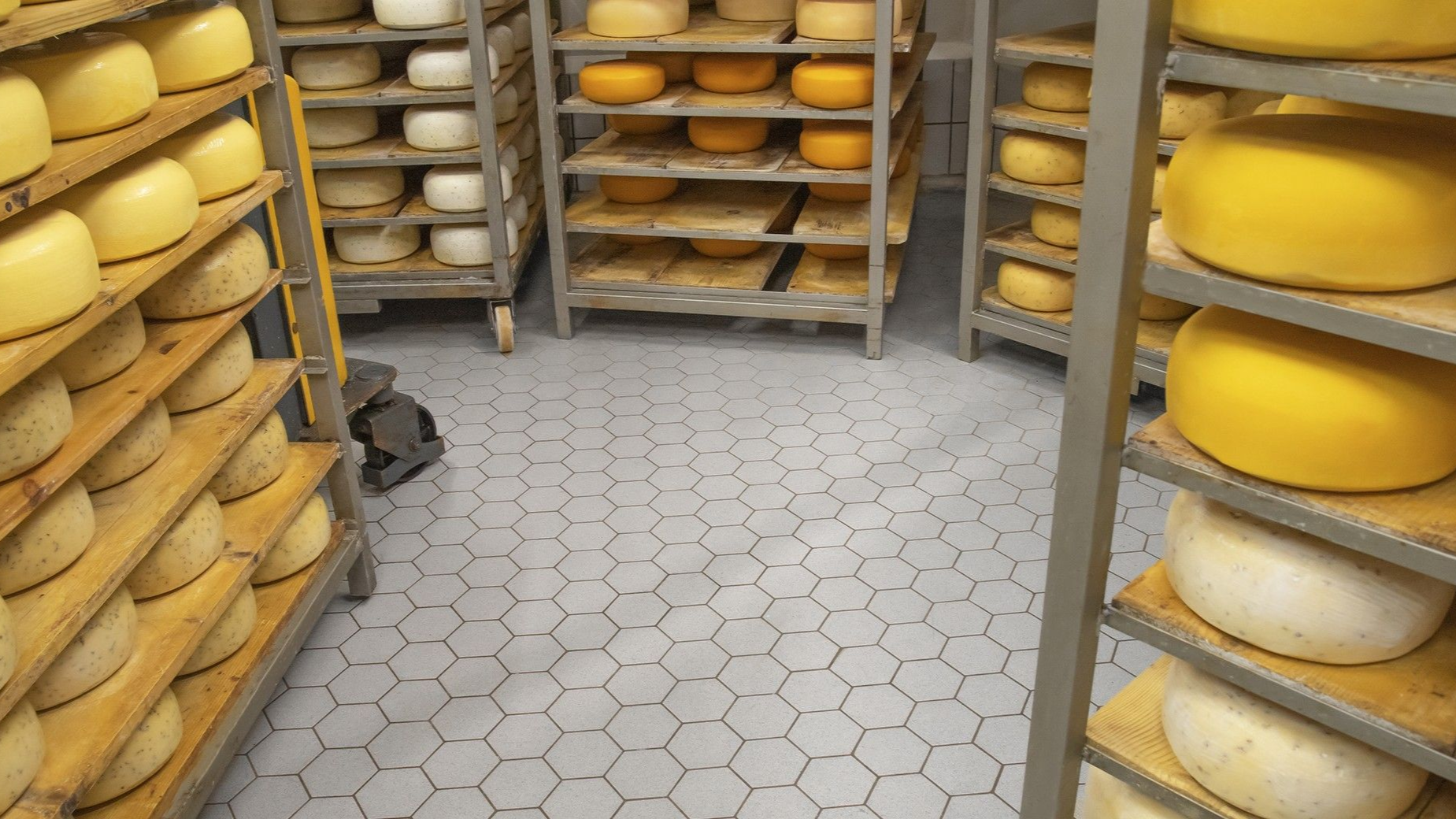
Comparing Industrial Flooring: Tile, Concrete, or Brick?

August 30, 2025

Share This Article

Industrial spaces face relentless pressure from equipment, foot traffic, and constant cleaning. The floor must hold up without breaking down over time. Concrete, brick, and ceramic tile are the most common choices for these environments. Each one brings something different to the table, but the right choice depends on how well it performs under stress.


Before committing to a surface, it's worth examining how these options compare in real-world conditions like durability, resistance, hygiene, and upkeep.


Durability

Concrete


Concrete is known for its strength, but it comes with a tradeoff. Over time, it chips and cracks under the stress of forklifts, dropped tools, or thermal shock. Unsealed or aging concrete can begin to powder, creating dust that spreads across the facility and into equipment. Repairs can be costly and often require shutting down sections of the workspace.

Brick


Brick offers more impact resistance than standard concrete and tends to handle weight better. However, its layered structure makes it vulnerable to separation under high traffic. Brick floors may hold up in low-impact areas, but repeated pressure from pallet jacks or tow motors can lead to shifting or uneven surfaces.

Tile


Ceramic tile stands apart in this category. Fully vitrified industrial tile is pressed at high force and fired at extreme temperatures, creating a dense, nonporous surface that resists cracking. Argelith tiles are designed to accommodate static loads, rolling loads, and point loads when properly specified and installed. The result is a floor that is designed for long-term performance under sustained industrial stress.

Chemical Resistance

Concrete


Standard concrete is porous and prone to chemical absorption unless sealed. Acids, oils, and harsh cleaners can seep into the surface, leading to staining, deterioration, or internal corrosion. Once compromised, the surface may weaken from the inside, requiring resurfacing or full replacement.

Brick


Brick has some natural resistance due to its density, but the joints between bricks are often the weak point. Mortar can degrade under exposure to caustic substances, allowing chemicals to penetrate beneath the surface. Over time, this leads to loose bricks or damage that spreads below the visible layer.

Tile


Fully vitrified tile resists chemical absorption due to its dense, nonporous structure. It holds up under frequent exposure to cleaning agents, acids, oils, and other industrial substances. When installed correctly using epoxy grout, tile creates a sealed surface that helps limit penetration and reduces the risk of long-term degradation.

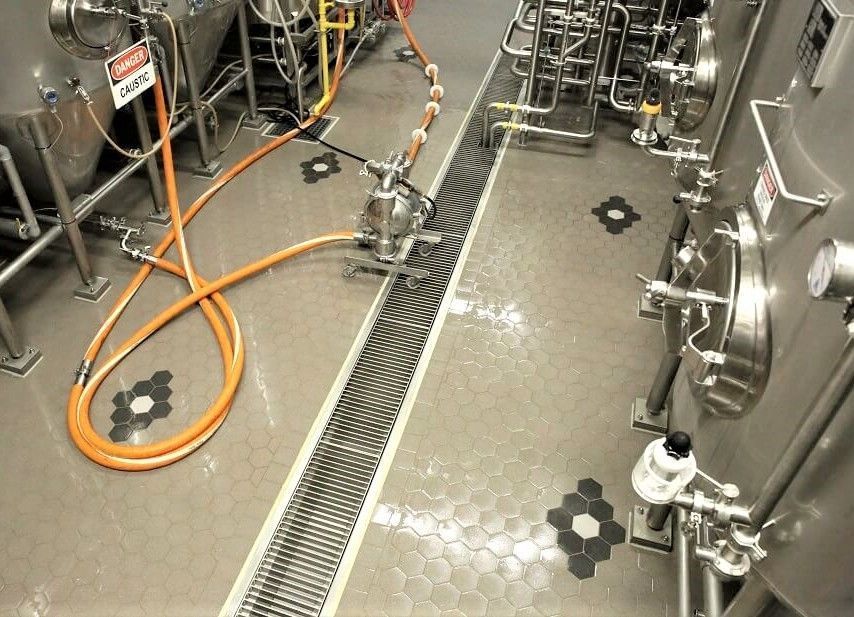
Industrial floor with a central metal drainage grate, surrounded by stainless steel tanks and orange hoses.

Hygiene & Cleanability

Concrete


Concrete surfaces trap grime in pores and microcracks, especially if unsealed or aging. Cleaning becomes less effective over time, and moisture can seep below the surface, which can contribute to conditions that are harder to keep clean over time. Even sealed concrete wears down with use, requiring reapplication to maintain sanitation standards.

Brick


Brick flooring presents similar challenges. The bricks themselves are dense, but the mortar joints can harbor dirt and moisture. Uneven surfaces and joint lines make thorough cleaning difficult, especially in environments where hygiene is closely monitored. Cleaning equipment may struggle to reach debris lodged between bricks.

Tile


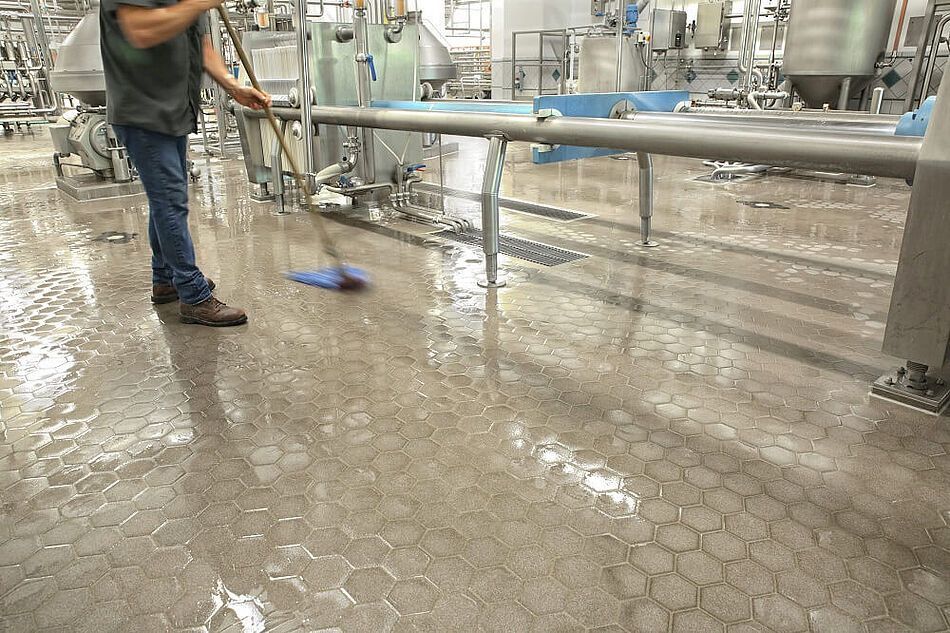
Tile offers a hard, sealed surface that does not readily absorb grime or moisture when properly installed and maintained. Its smooth profile allows cleaning machines to cover more area efficiently, while tight grout joints reduce the risk of buildup in seams. This combination supports strict sanitation standards and helps maintain a cleaner work environment over time.

Slip Resistance & Safety

Concrete


New concrete can provide moderate slip resistance, especially when textured or treated. However, surface wear, polishing, or accumulated grime often reduces traction over time. In wet or oily environments, untreated concrete can become slick and increase the risk of falls.

Brick


Brick naturally has more texture than smooth concrete, offering better grip in dry conditions. But it can become hazardous when wet, particularly if the surface is worn or uneven. Older brick floors may develop irregularities that catch wheels or cause tripping hazards.

Tile


Slip-resistant tile is designed to perform in environments where water, oil, or chemicals may be present. Specialized surface textures provide consistent traction underfoot, supporting traction underfoot in routine operating conditions. Many tile options include built-in safety features like abrasive stripes or color contrasts, which help mark walkways, work zones, or elevation changes for added visibility.

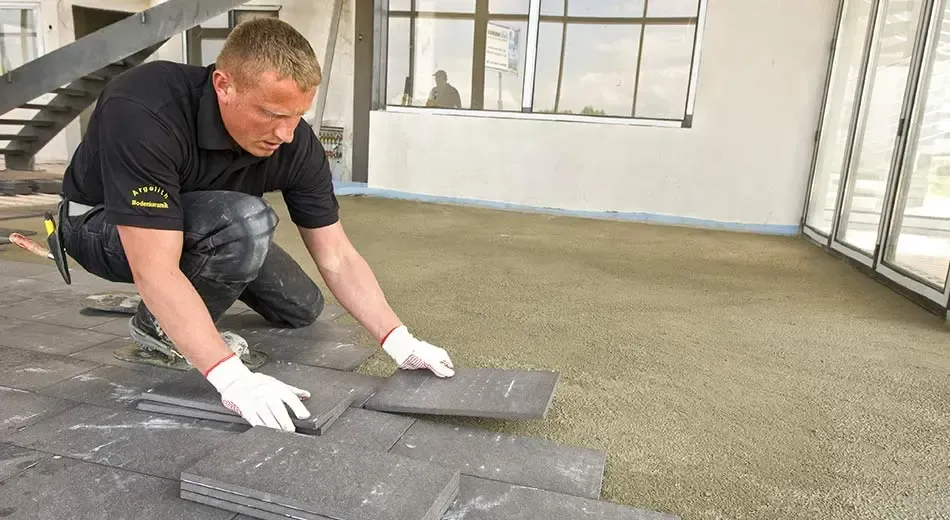
A person wearing white gloves kneels on a floor, carefully installing dark, square tiles.

Installation & Maintenance Costs

Concrete


Concrete is widely considered a low-cost option at the outset, particularly for expansive facilities. However, surface wear, cracking, and joint movement are common over time. These issues may require resurfacing or section removal, interrupting workflow and adding to operational expenses.

Brick


Brick installation requires more time and labor due to the hand-laid nature of the material. Upfront costs reflect this complexity. As usage increases, mortar joints can deteriorate and individual bricks may shift out of alignment. These localized issues demand ongoing attention in high-traffic zones.

Tile


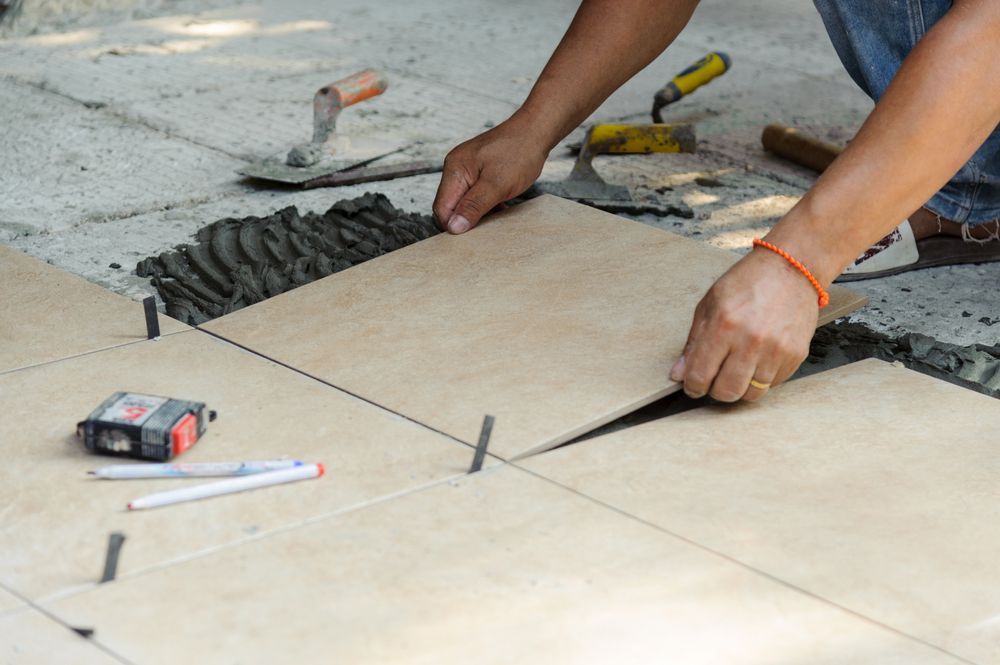
Tile installation is precise and labor-driven, but the
long-term payoff is stability and ease of upkeep. The surface resists wear without frequent repair, and damaged sections can be addressed tile by tile. Regular cleaning is usually sufficient to maintain appearance and function, keeping long-term costs lower compared to more failure-prone surfaces.

Aesthetic & Zoning Capabilities

Concrete


Plain concrete offers limited visual flexibility. Paint or epoxy coatings can add color, but these layers wear off under traffic or aggressive cleaning. Once surface treatments begin to degrade, the floor can appear patchy or uneven. Recoating adds to upkeep and may interrupt operations during application.

Brick


Brick has a distinct appearance but limited design adaptability. Color options are restricted to natural tones, and layouts tend to follow traditional patterns. Creating visual cues or designated zones requires additional surface treatments, which may not hold up well under heavy use.

Tile


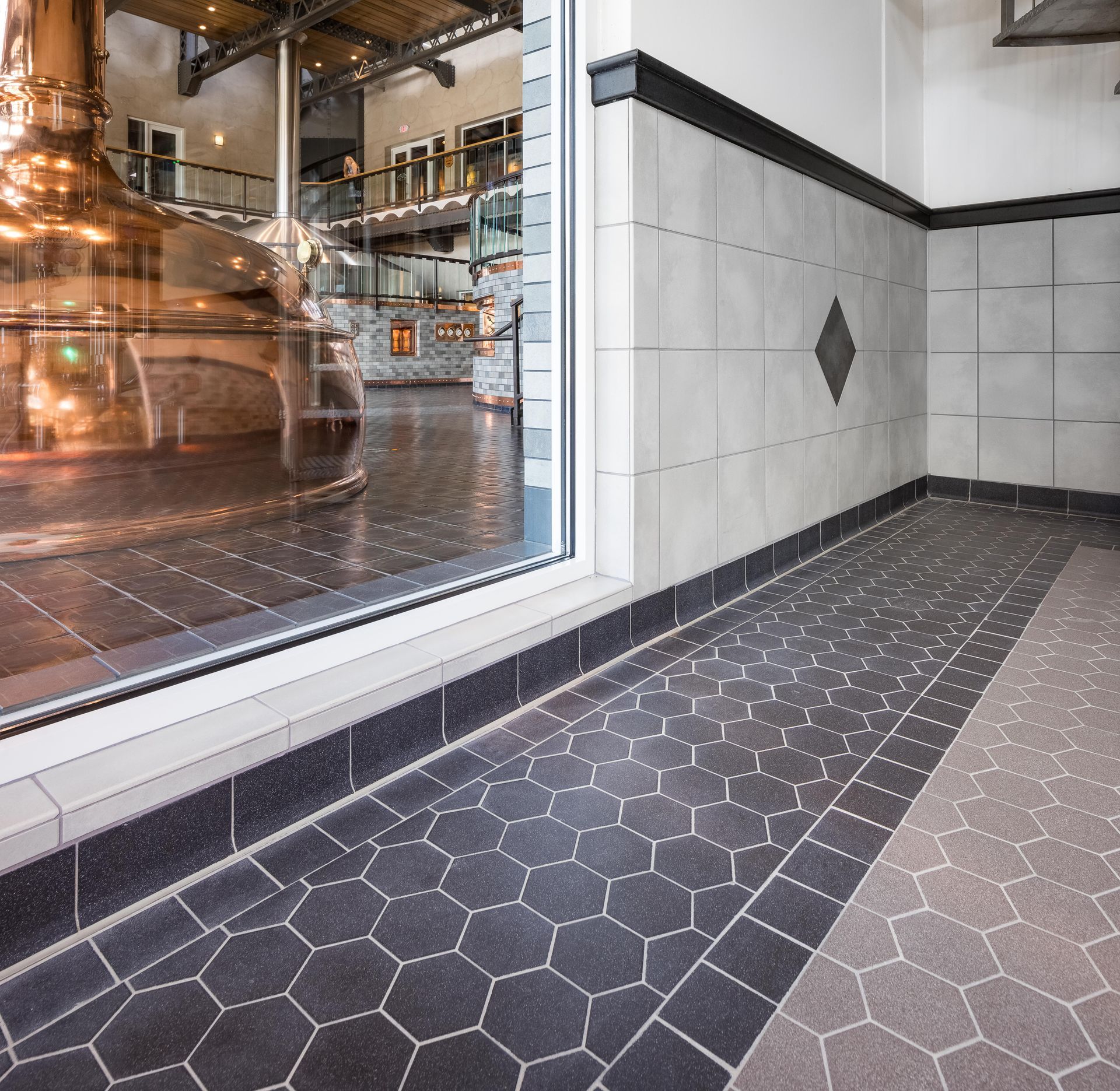
Industrial tile is available in a range of colors and surface finishes, allowing facilities to combine function and design. Different shades can be used to define work zones, pathways, or safety areas without relying on coatings that wear away. Some formats also support edge markings or directional flow cues built directly into the flooring layout.

Why Argelith Leads the Category

When evaluated for durability, hygiene, and lifecycle performance, tile often outperforms concrete and brick in demanding industrial environments. It withstands wear, chemicals, and moisture, while also supporting hygiene and safety requirements. Unlike surfaces that break down or need frequent resurfacing, tile delivers lasting reliability and design flexibility for industrial environments.


Argelith manufactures engineered
ceramic tiles built for high-pressure settings, combining German precision with proven durability. Decision-makers gain a surface that performs for decades and a partner who understands the challenges of industrial flooring.

Disclaimer: Flooring performance characteristics vary based on product selection, substrate conditions, installation methods, traffic patterns, and maintenance practices. No single flooring option is suitable for every environment.

Connect With Us

Wide supermarket aisle with products on shelves, overhead signs.
March 2, 2026
Argelith Ceramic Tiles delivers durable retail flooring and grocery store flooring engineered for heavy traffic, safety, and long-term performance.
A bright auto repair shop where a technician works on a black SUV, while a white SUV sits parked nearby.
September 23, 2025
Complete guide to automotive flooring solutions covering durability, safety, chemical resistance, and why vitrified ceramic tiles support facilities today.
Industrial facility floor featuring light-colored hexagonal tiles beneath a complex system of stainless steel pipes.
September 5, 2025
Learn how fully vitrified tiles deliver exceptional durability, low water absorption, slip resistance, easy maintenance.
Show More