Ceramic Tile vs Urethane Cement Flooring in Commercial Spaces
Argelith •
October 23, 2026
Choosing flooring for a demanding commercial or industrial facility requires looking beyond the initial installation. Heavy traffic, rolling equipment, chemical exposure, temperature changes, moisture, cleaning requirements, and future repairs can all influence how much a floor ultimately costs to own.
In the tile vs urethane cement flooring comparison, both systems can perform in challenging environments. The difference is how they provide that performance and how each system fits the facility's long-term operational priorities.
For owners and facility managers, understanding those differences can lead to a more informed flooring investment.
How Fully Vitrified Ceramic Tile and Urethane Cement Differ
Urethane cement, also called polyurethane cement, is a resinous flooring system applied over a prepared substrate. Depending on the formulation, these systems can provide an impervious surface with strong resistance to chemicals, impact, abrasion, and thermal shock. Some formulations also cure rapidly, making urethane cement useful for projects with limited installation windows.
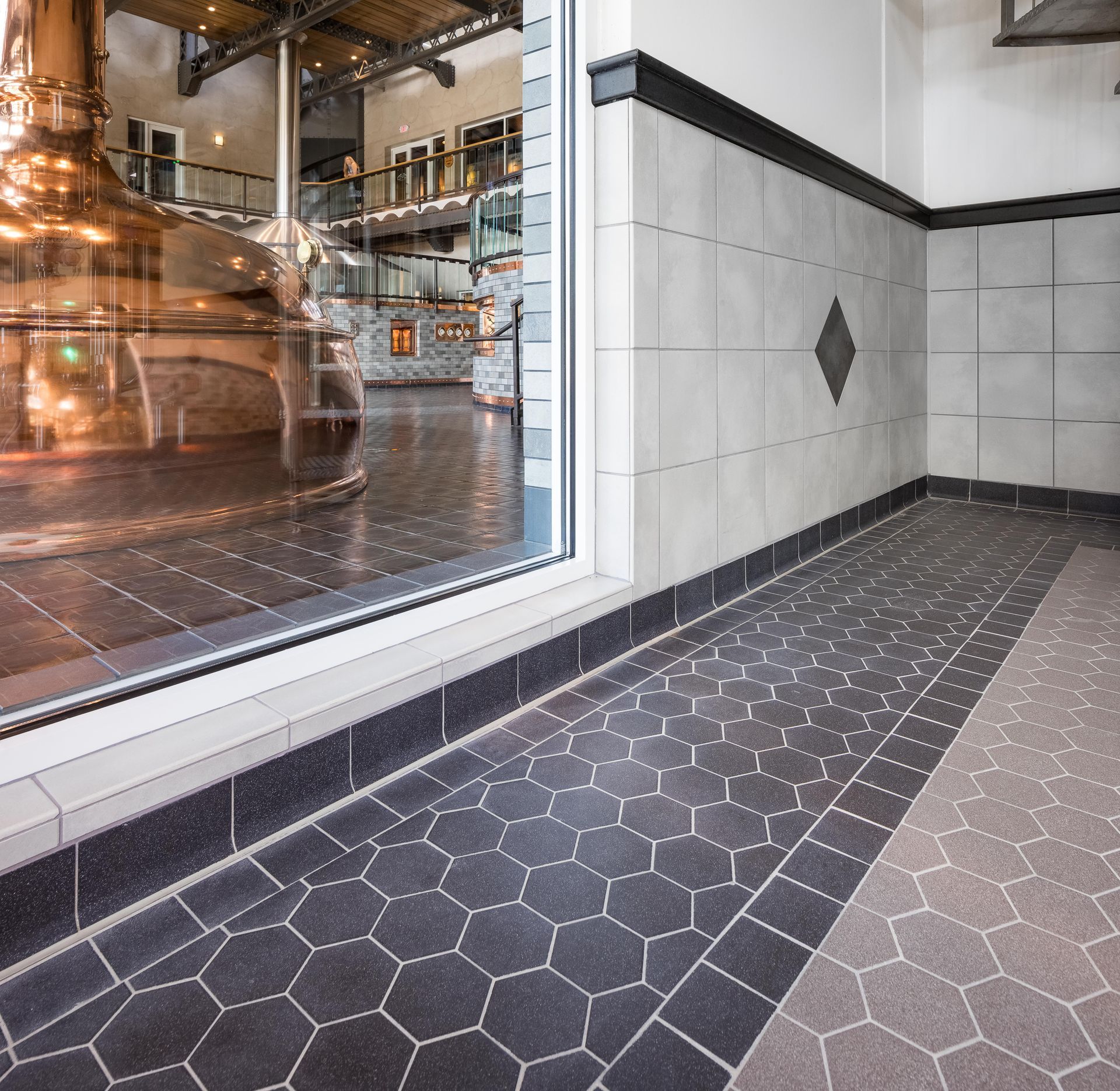
Fully vitrified ceramic tile achieves performance differently. Argelith tiles are manufactured through a high-temperature firing process that creates an exceptionally dense ceramic body. Performance characteristics such as abrasion resistance, low absorption, and the engineered surface structure are inherent to the tile rather than dependent on a topical coating.
That distinction becomes increasingly important when evaluating flooring over years of service.
Comparing Durability Under Heavy Traffic, Impact, and Daily Use
Forklifts, pallet jacks, service carts, machinery, and constant foot traffic subject commercial floors to repetitive mechanical stress.
Quality urethane cement systems are designed for demanding traffic and can provide excellent resistance to impact and abrasion. Fully vitrified ceramic tile is also engineered specifically for these conditions.
Argelith
high-traffic tile flooring is designed to withstand repeated mechanical loads and heavy traffic when properly specified and installed. Because its performance is built into the dense tile body and fired surface, there is no separate wear layer that provides the tile's fundamental abrasion resistance.
Localized damage should also be considered. Individual ceramic tiles can be removed and replaced when necessary, allowing repairs to focus on a defined area rather than automatically replacing a larger flooring section.
Chemical, Moisture, and Thermal Resistance in Demanding Environments
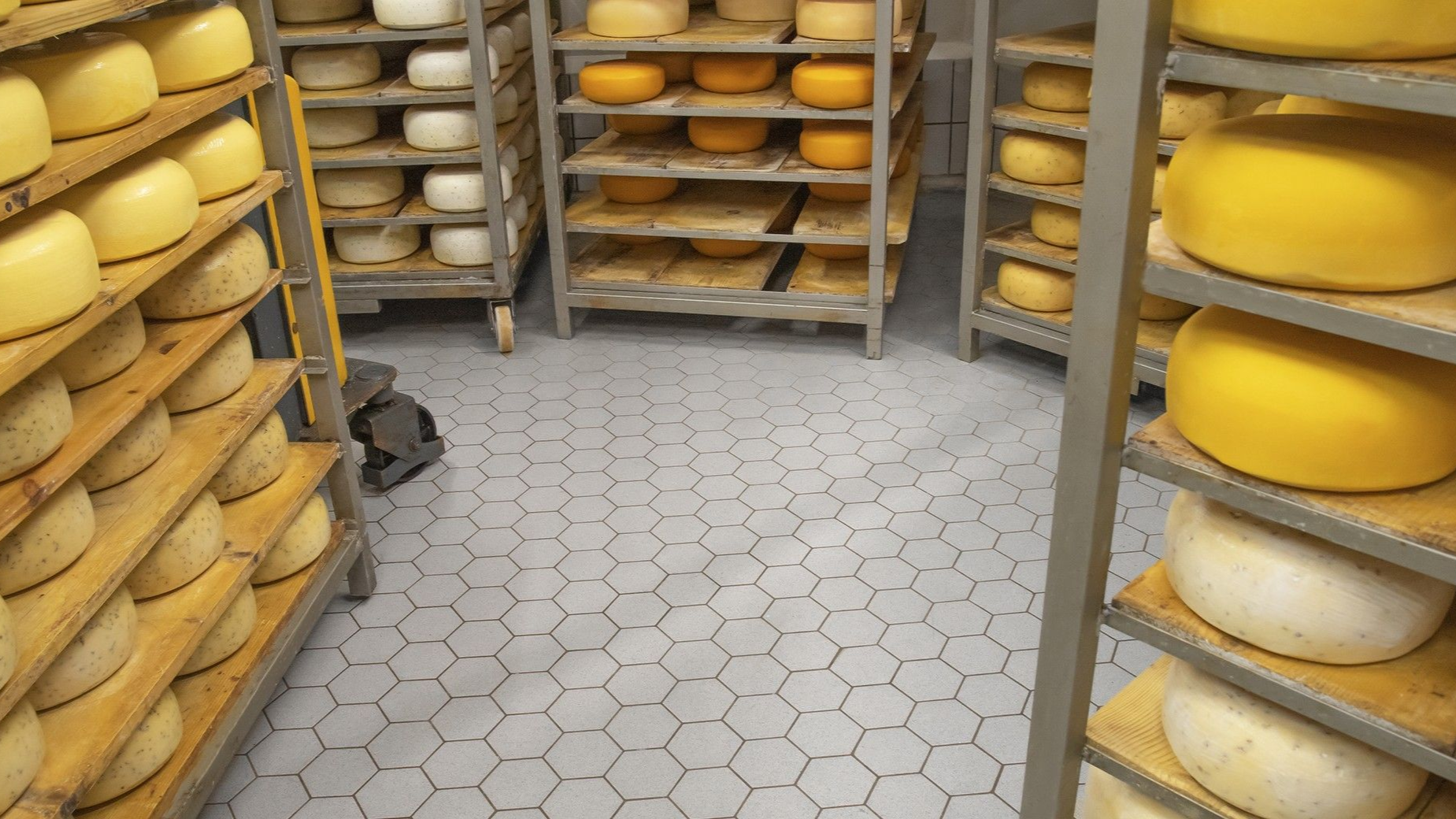
Commercial kitchens, food processing plants, breweries, laboratories, and manufacturing facilities can expose flooring to chemicals, hot liquids, oils, water, and rapid temperature changes.
Both urethane cement and fully vitrified ceramic tile can be specified for many of these environments.
Modern urethane cement systems are available with high chemical resistance and formulations designed for thermal shock. Some heavy-duty systems are specifically engineered for wet processing and high-temperature conditions.
Argelith's vitrification process creates a dense ceramic material with very low absorption and resistance to many acids, alkalis, and other substances encountered in industrial operations. Its
heat-resistant ceramic tile solutions are also engineered for environments experiencing temperature fluctuations and thermal stress.
For wet and chemically demanding food and beverage environments, the complete ceramic tile flooring system is especially important. Appropriately specified chemical-resistant epoxy thinset setting materials and epoxy grout complement the fully vitrified ceramic tile, helping the installed system withstand moisture, sanitation chemicals, and demanding production conditions.
In either system, specifications should be based on actual temperatures, chemicals, concentrations, exposure times, and cleaning procedures.
Cleaning, Hygiene, and Long-Term Surface Performance
Urethane cement's seamless nature can be attractive in hygiene-sensitive applications because it eliminates conventional grout joints across the main floor surface.
Fully vitrified ceramic tile takes a different approach. Its dense structure limits liquid penetration into the tile, while narrow, properly installed grout joints can help create a cleanable industrial flooring system. Where aggressive chemical exposure is expected, appropriate epoxy grout should be considered.
Surface texture also matters. Argelith offers different slip-resistant structures so designers can balance traction and cleanability according to the conditions in each zone.
The important question is not simply whether a floor is seamless. It is whether the complete installed system can withstand the facility's cleaning practices and remain maintainable over its intended service life.
Installation, Repairs, and Operational Downtime
Installation schedules can favor different systems depending on the project.
Fast-curing urethane cement can be particularly useful for renovations where the floor must return to service quickly. Certain commercial urethane cement products are specifically formulated around compressed installation schedules.
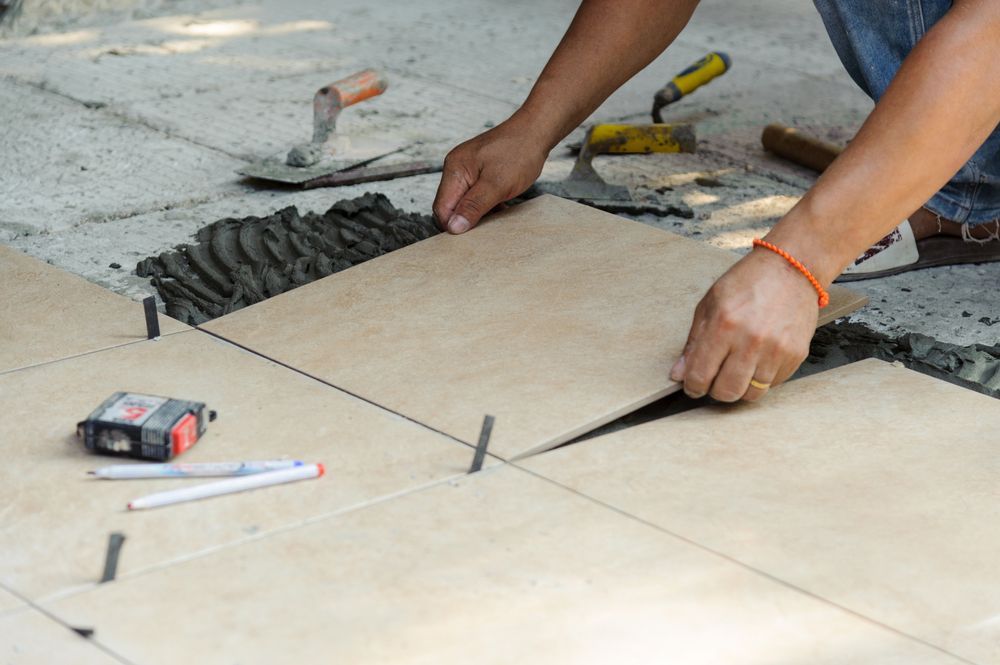
However, ceramic tile should not automatically be assumed to require more installation time. Installation duration and return-to-service timelines depend on the specific flooring systems, setting and grouting materials, required cure times, substrate preparation, environmental conditions, and project requirements.
For Argelith's U.S. food and beverage projects, epoxy thinset is the predominant installation method, particularly in wet processing areas and environments exposed to demanding sanitation chemicals. When appropriately specified, chemical-resistant epoxy setting materials and epoxy grout work together with the fully vitrified ceramic tile to support long-term flooring performance.
Project teams should compare the installation requirements and documented cure times of the specific ceramic tile and urethane cement systems under consideration rather than assuming one approach will consistently return to service faster.
That initial investment in installation should be considered alongside future maintenance.
If localized damage occurs, individual tiles can generally be replaced. This repairability can be valuable in facilities where closing a large production area for extensive flooring work would be costly.
Upfront Cost vs. Total Cost of Ownership
Comparing flooring solely by price per square foot can obscure the real cost of ownership.
The better calculation includes initial materials and installation, expected maintenance, repairs, production downtime, cleaning, resurfacing or renewal requirements, and eventual replacement.
A lower initial flooring cost does not necessarily mean a lower lifecycle cost.
Argelith explores this distinction further in
why lower-cost industrial flooring is not always cost-effective.
The objective is not simply to minimize today's flooring invoice. It is to determine how much the floor is likely to cost the facility throughout its service life.
Why Service Life Matters When Calculating Flooring Value
Consider two flooring systems with different installed costs and replacement schedules.
A system that costs less initially but requires significant repairs, resurfacing, or earlier replacement can generate additional material, labor, disposal, and downtime costs. A more durable system may require greater capital investment at installation but distribute that investment across a longer service period.
This is where fully vitrified ceramic tile can provide a compelling lifecycle proposition.
Argelith engineered tiles are designed for long-term exposure to heavy traffic, mechanical loads, cleaning, and demanding industrial conditions. The fired surface and dense ceramic structure provide material characteristics that do not depend on routinely applying a new topical performance layer.
As explained in Argelith's guide to the
benefits of durable flooring for demanding workspaces, reducing recurring repairs and replacement can help facilities protect uptime while controlling total cost of ownership.
Choosing the Right Flooring System for Long-Term Commercial Performance
There is no single flooring material that is appropriate for every commercial environment.
Urethane cement can be an effective solution when a seamless resinous surface, chemical resistance, thermal-shock resistance, or rapid installation is a primary project requirement.
Fully vitrified ceramic tile becomes particularly compelling when the facility prioritizes abrasion resistance, heavy-traffic performance, very low absorption, replaceable individual units, and long-term material performance.
Before making the final selection, evaluate:
- Traffic and mechanical loads
- Impact exposure
- Chemicals and cleaning agents
- Wet and dry operating conditions
- Temperature extremes and thermal changes
- Slip-resistance requirements
- Hygiene and cleaning protocols
- Installation time
- Repair requirements
- Expected service life
- Operational downtime
- Total cost of ownership
Flooring value should ultimately be measured by how effectively the complete system performs over time.
For facilities where the floor is expected to endure years of heavy use, investing in a flooring system engineered for long-term performance can help reduce repair cycles, protect operations, and provide greater lifecycle value.
Explore Argelith's high-performance flooring for demanding workspaces or request a consultation to discuss fully vitrified ceramic tile for your facility.
Disclaimer: Floor performance characteristics depend on proper product selection, substrate preparation, installation methods, site conditions, and ongoing maintenance. Slip resistance ratings and hygienic performance may vary based on use conditions, cleaning practices, and environmental factors.